Pentax 67: The Medium Format Camera That Refuses to Die
Page Sands · February 4, 2025
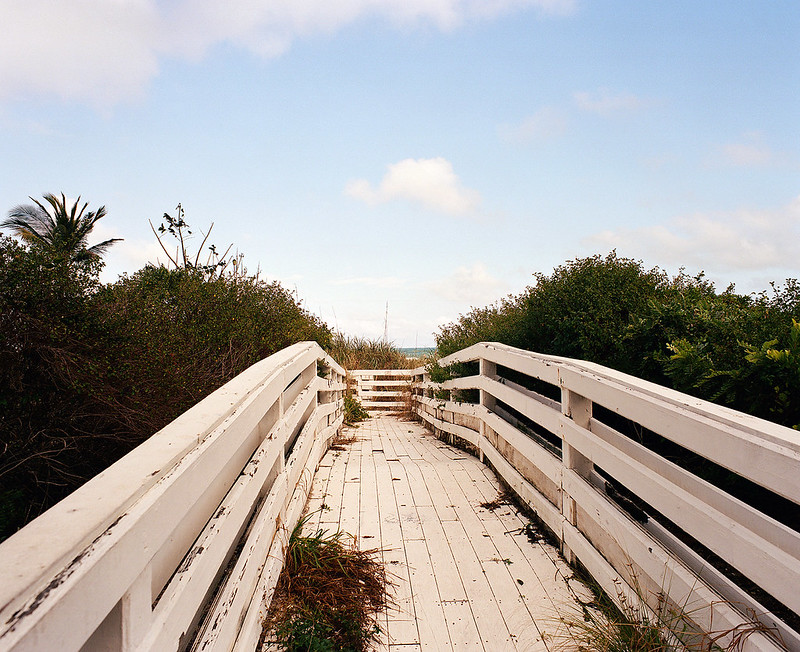
Pick up a Pentax 67 and two things register immediately. Your arm feels the weight: five pounds, five ounces of metal and glass, before you mount a lens. Then your eye hits the viewfinder, and none of that matters.
The 6x7 centimeter negative covers almost five times the surface area of 35mm film. Colors saturate differently. Skin tones carry a warmth that photographers call "the glow." Grain dissolves into texture. Photographers who shoot the Pentax 67 alongside digital systems describe the results the same way: three-dimensional.
Bruce Weber shot campaigns with this camera. Terence Donovan used it for editorial work in the 1970s and 1980s. The system earned its reputation in professional studios before the used market put it in everyone else's hands.
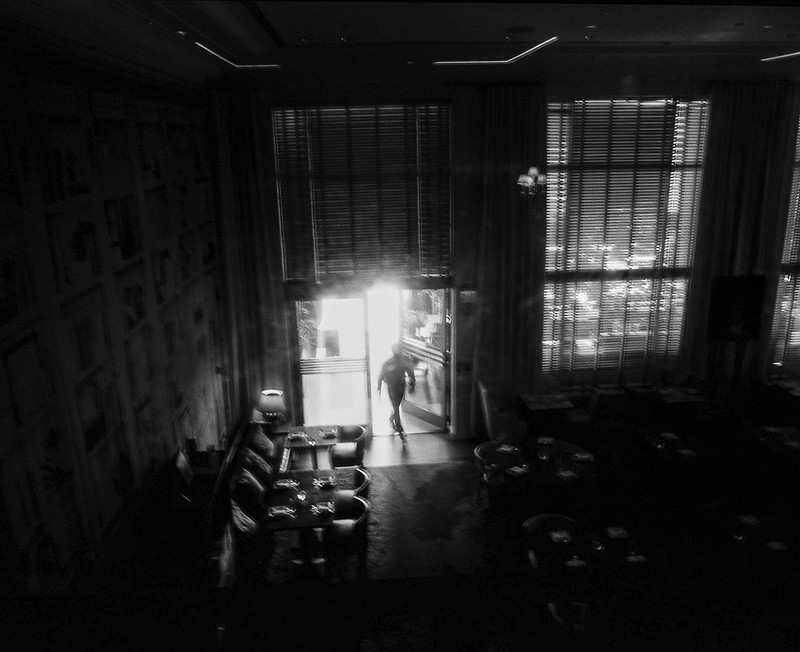
Why the Pentax 67 in 2025
The film photography market hit $163.3 million in revenue during 2024. North America accounts for more than 40% of that total. Kodak reported a 127% increase in wholesale film orders since 2020, with Portra 400 demand alone jumping 156% over the same period.
Those numbers reflect a shift in who buys film cameras. Forty-one percent of new film customers are under 25. Gen Z photographers discovered medium format film photography through Instagram and TikTok, where the Pentax 67's distinctive rendering made it one of the most tagged film cameras on either platform.
The 6x7 format now accounts for 31% of medium format camera sales. The negative is large enough to deliver resolution and tonal depth that rivals digital medium format, while remaining small enough to hand-hold in good light.
The Lens System: What Actually Matters
The Pentax 67 offers something no other medium format system can match at this price: more than 20 interchangeable lenses covering 35mm to 800mm. Four lenses account for 90% of what working photographers actually carry.
| Lens | Nickname | 35mm Equiv. | Best For | Used Price |
|---|---|---|---|---|
| 105mm f/2.4 | The Legend | ~50mm | Portraits. Background separation that full-frame digital cannot match. | $250-$350 |
| 90mm f/2.8 | The Workhorse | ~45mm | Street, environmental portraits, documentary. | $150-$250 |
| 55mm f/4 | The Wide | ~28mm | Landscapes and architecture. | $150-$250 |
| 200mm f/4 | The Sleeper | ~100mm | Tight portraits with compressed backgrounds. | $50-$100 |
What the Pentax 67 Does That Digital Does Not
Tonal latitude. Medium format film holds highlight and shadow detail across a wider dynamic range than most digital sensors under $5,000. Wedding photographers shooting Portra 400 in mixed lighting consistently report fewer blown highlights and blocked shadows.
Skin rendering. Film compresses highlights gradually rather than clipping them. On skin, that produces smoother tonal transitions between light and shadow. Portrait photographers who switched from digital to the Pentax 67 call the difference "organic."
The shooting experience. No LCD. No histogram. No chimping. Twelve frames per roll of 120 film. Each exposure costs roughly $1.50-$2.00 when you factor in film and processing. The mirror slap is thunderous. Every frame is a decision, not a burst.
Buying a Pentax 67: What to Know
The system went through three major iterations, and they all share the same lens mount.
The original Pentax 6x7 (1969) is the purest mechanical version. The Pentax 67 (1989) added mirror lock-up, a hot shoe, and improved metering. The 67II (1998) brought matrix metering, auto exposure, and a quieter mirror. Bodies range from under $500 for a clean 6x7 to $800-$1,000 for a late 67II.
Start with the 105mm f/2.4. It defines the system. Add the 90mm f/2.8 or 55mm f/4 depending on whether you shoot more portraits or wide scenes. A complete two-lens kit with body runs $700-$1,200 total.
Film Stock Pairings for the Pentax 67
Kodak Portra 400 is the default for portraits and weddings. Its latitude forgives one to two stops of overexposure without losing highlight detail. Portra 160 produces finer grain and more saturated color under controlled studio light.
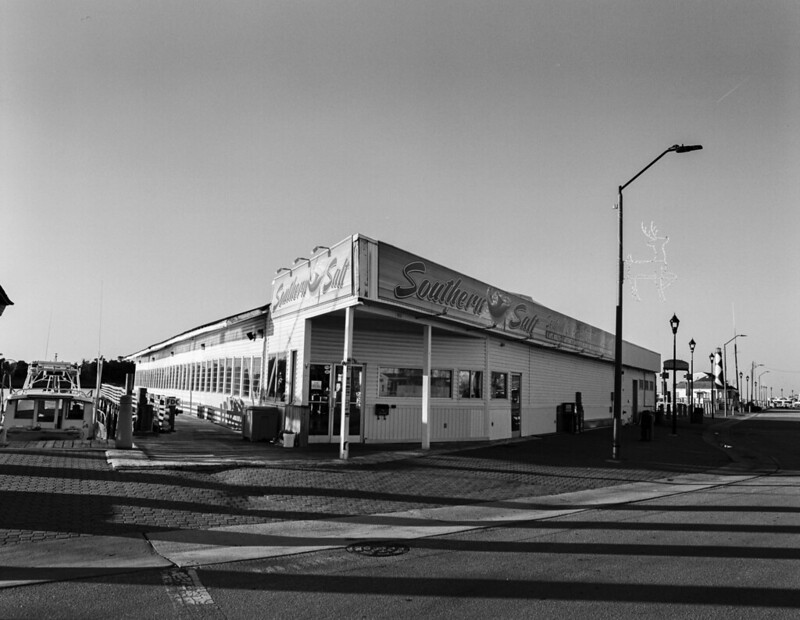
Kodak Tri-X 400 delivers classic black and white contrast with visible but pleasing grain. On a 6x7 negative, that grain becomes texture, not degradation.
CineStill 800T is worth trying for tungsten-balanced night photography, particularly in Charleston and similar cities where warm street lighting creates distinctive color casts.
The Infrastructure Supporting Film in 2025
Shooting film requires processing, and the infrastructure is growing. 312 new film labs opened globally in 2025. Processing volumes for 120-format roll film grew 17% in Q2 2025.
Mail-order processing from labs like The FIND Lab, Richard Photo Lab, and Indie Film Lab means geography is no longer a barrier to professional results. Turnaround runs 5-10 business days. Scan resolutions reach 10,000 DPI, capturing every detail a 6x7 negative contains.
What This Means for Photographers Considering Medium Format
The Pentax 67 is not for everyone. It is heavy. It is loud. It costs money per frame. There is no autofocus, no stabilization, and no way to review your work until scans arrive.
For photographers who value process alongside outcome, who want a rendering style that separates their work from digital, and who find creative motivation in the discipline of twelve frames per roll, there is no better entry into medium format film.
The economics favor it. A complete system costs less than a single high-end digital lens. Film processing infrastructure is expanding. And the images that come out of a Pentax 67 — the tonal depth, the skin rendering, the three-dimensional quality of a properly exposed 6x7 negative — those have remained unchanged for sixty years.
Frequently Asked Questions
What is the difference between the Pentax 67 and 67II?
The 67II (1998) added matrix metering, auto exposure, and a quieter mirror mechanism over the original 67. The AE prism is the biggest upgrade — it meters through the lens automatically. Body refinements improved ergonomics slightly. Expect to pay $800-1,200 for a 67II versus $400-700 for the earlier 67. Both share the same lens mount and produce identical image quality.
How much does a Pentax 67 cost in 2025?
Bodies range from $400-700 for a clean Pentax 67 to $800-1,200 for a late 67II. The legendary 105mm f/2.4 lens runs $250-350. A complete two-lens system can be assembled for under $1,000. I recommend KEH, eBay, and r/photomarket for sourcing. Always verify shutter speeds and mirror mechanism.
How heavy is the Pentax 67?
The body weighs 5 pounds 5 ounces without a lens — roughly the weight of a small dumbbell. Add the 105mm f/2.4 and you're approaching 7 pounds total. It's heavier than the Mamiya RB67 by about half a pound. I strongly recommend the wooden grip accessory for extended shooting sessions. This camera rewards a tripod.
What is the best lens for the Pentax 67?
The 105mm f/2.4 defines the system. At f/2.4 on a 6x7 negative, the depth of field creates background separation no full-frame digital can match. For wider work, the 55mm f/4 or 90mm f/2.8.
How many shots do you get per roll with the Pentax 67?
Ten exposures on a standard roll of 120 film, or twenty on 220 film (though 220 is increasingly scarce). Each frame costs roughly $1.50-$2.00 when factoring in film and processing.
Can you still get film and processing for the Pentax 67?
Absolutely. Kodak Portra 400, Tri-X 400, and Gold 200 are all readily available in 120 format. Film processing infrastructure is actually growing — 312 new labs opened globally in 2025. Mail-order labs like The FIND Lab, Richard Photo Lab, and Indie Film Lab offer 5-10 day turnaround. Expect $20-30 per roll for develop and scan.